
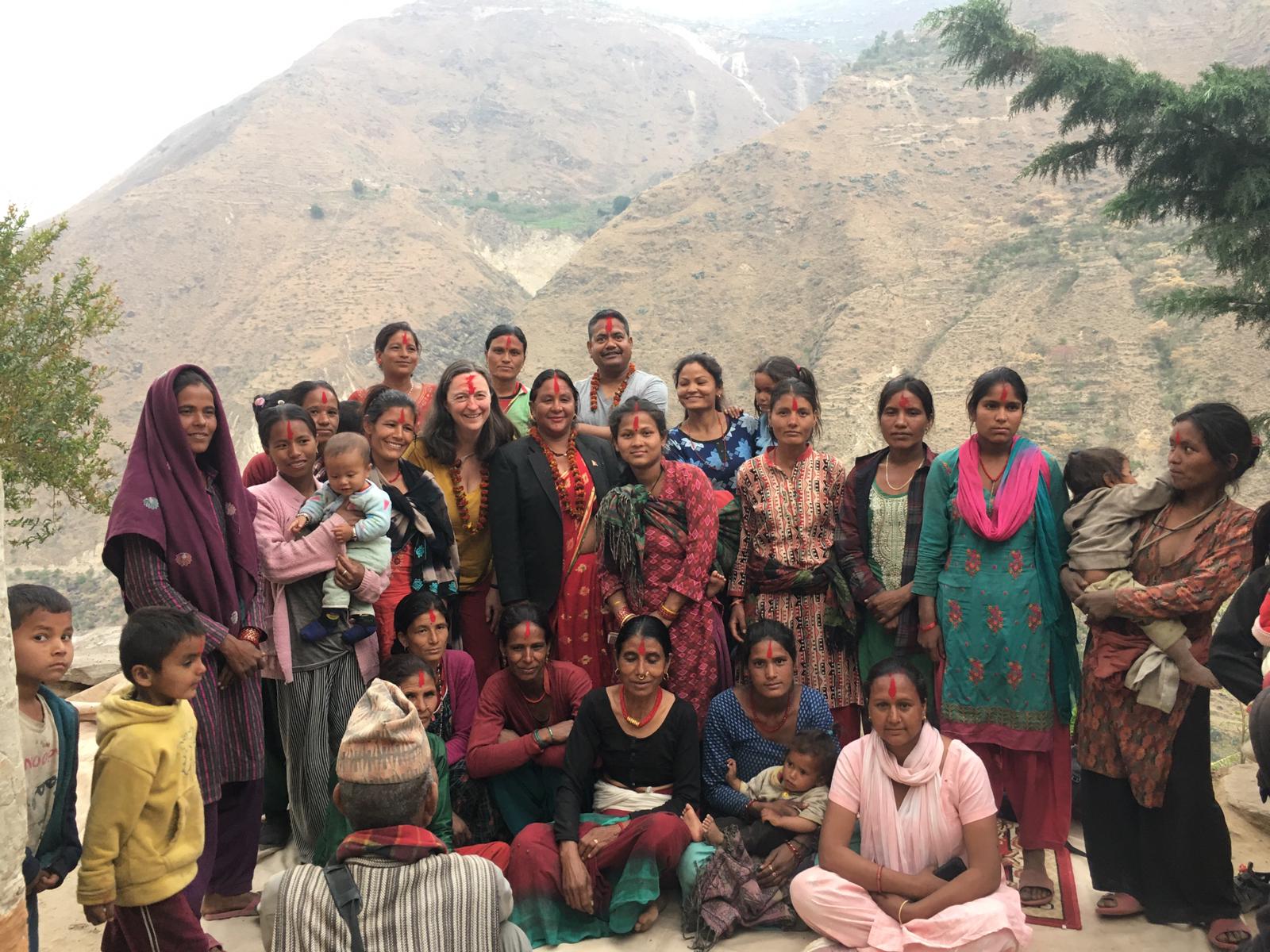
Recent Programmes Shakti I & II 2022 -28
Shakti I & II are SHEP & Sahakarmi Samaj’s most recent community development programmes, funded consecutively through Irish Aid’s Civil Society Fund. The programmes utilise the Facilitation for Social Empowerment & Transformation (FEST) method to empower marginalised people – 90% of whom are women – supporting them through training and facilitated group discussions to self-organise into independent community development groups (CDGs) and community based networking organisations (CBNOs). The groups organise multiple social and community improvement activities, group savings schemes, income generation programmes and advocacy campaigns, drawing up Action Plans to access services, rights and funding from local government. Sahakarmi also works with local government staff and officials to facilitate a community responsive approach to governance. The working areas for Shakti are in Western Nepal: Bajura, a remote hilly district and Beldandi District in the Terai lowlands.
Irish Aid Funded Work
Through successive three year programme cycles, Irish Aid’s Civil Society Fund has generously supported SHEP & Sahakarmi Samaj’s work with vulnerable communities since 2008.
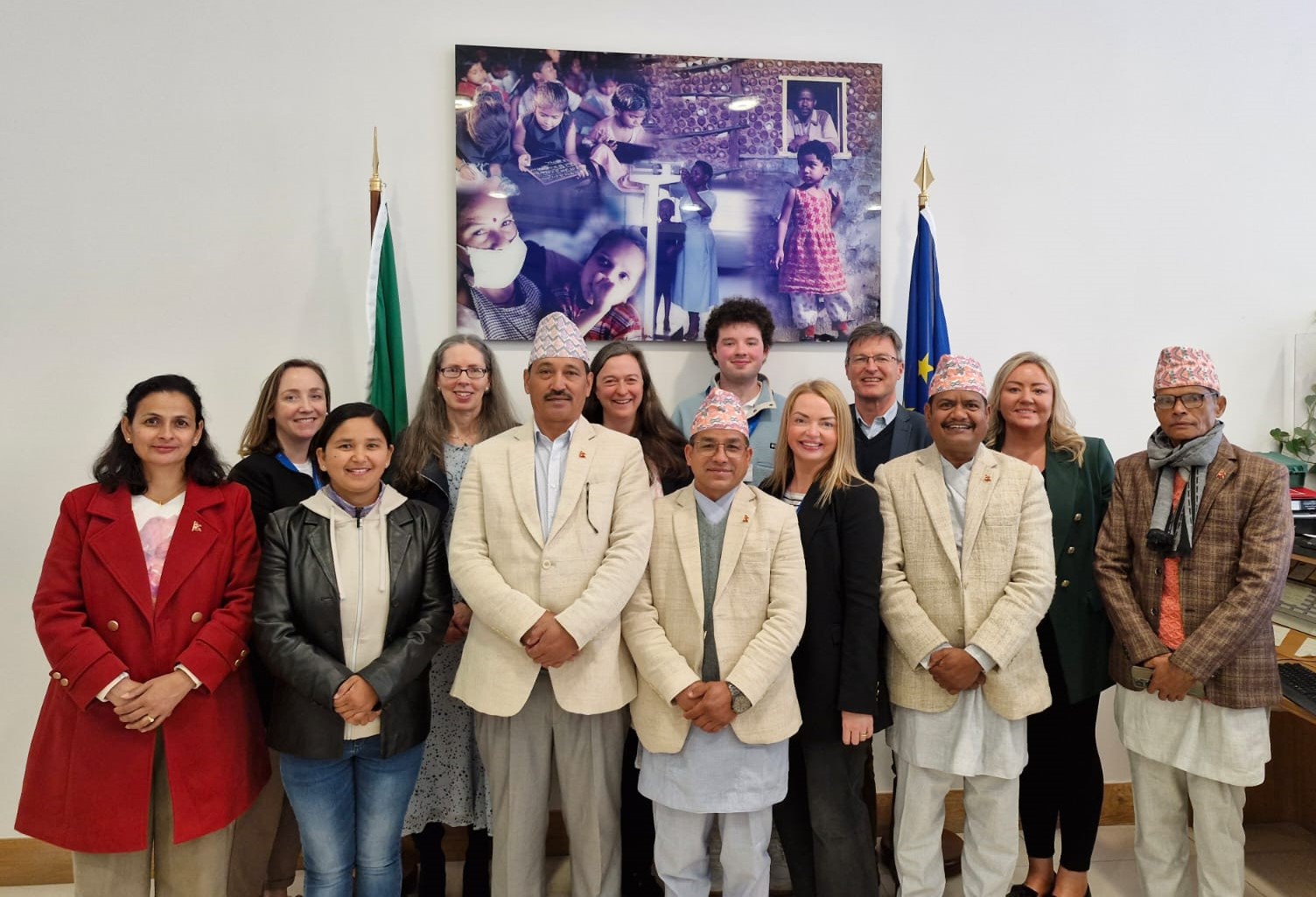
SHEP, Sahakarmi and Irish Aid staff at Irish Aid Office , Limerick April 2024
SHEP’s Learning Partnership with Sahakarmi Samaj
In 2007 SHEP entered into a learning partnership with the Nepalese NGO, Sahakarmi Samaj (‘Working Together’), a community development organisation that has worked on community empowerment projects in Nepal since 1998.
Like SHEP, Sahakarmi Samaj specialises in the training and deployment in the community of skilled facilitators. The main aim of the organisation is to strengthen and mobilise community groups and networks in order to address social, health and economic challenges.
Sahakarmi’s facilitators work to build trust and solidarity among members of village communities and provide support to community groups, as they learn how to manage their affairs through democratic deliberation and planned collective action. Since 2007, Sahakarmi’s work has led to the establishment of hundreds of community-based organisations which continue to address the direct needs of their respective communities, directly helping thousands of disadvantaged people.
Facilitation for Empowerment and Social Empowerment
Sahakarmi uses the FEST approach (see separate section), which is based on a belief that people themselves can bring real change to their lives and that the role of a supporting NGO is to create an enabling environment. Within this approach, communities independently analyse problems and plan and implement responses appropriate to their situations.
The strategy used by SS comprises the following elements with communities:
- Group and network formation
- Building problem solving skills with the community groups
- Development and capacity building of community groups
- The creation of learning materials
- The creation of a database of local service providers and available resources for use by community groups.